oaiq( “measure”, “page_viewed”, { type: “contents” } );

Category: Hiring a Marketer

  • WordPress vs Shopify for Dubai Businesses: Which Platform Should You Choose?

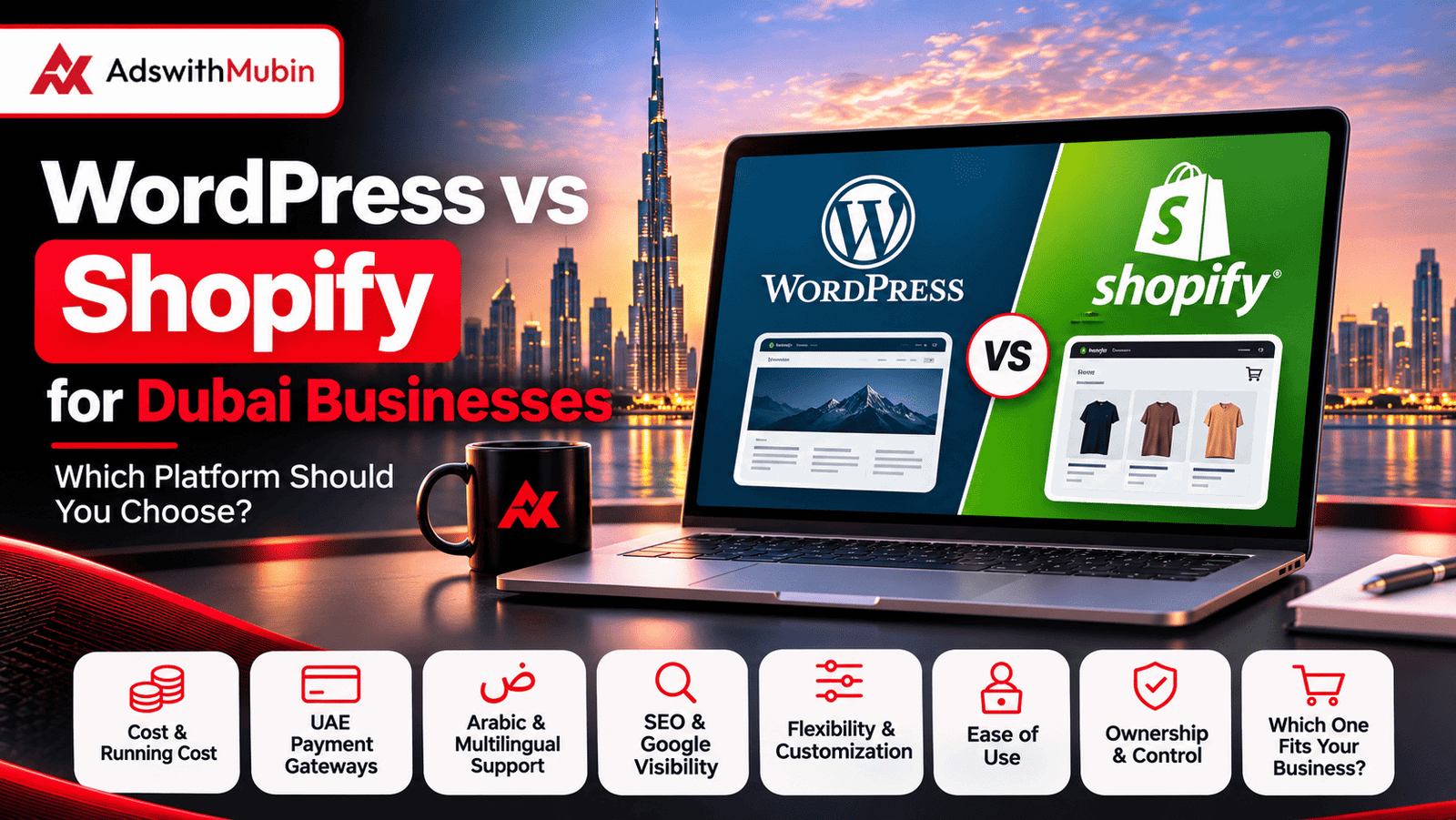
    WordPress vs Shopify for Dubai Businesses: Which Platform Should You Choose?

    By Mubin Shaikh | Ads With Mubin


    “Should I build on WordPress or Shopify?”


    It’s one of the first questions Dubai business owners ask me before a new website. And it matters, because switching platforms later means rebuilding pages, moving products, redirecting URLs and often losing time and rankings along the way.


    The honest answer: neither is better across the board. They’re built for different jobs. Shopify is a dedicated ecommerce platform. WordPress is a flexible website system that can run an online store through WooCommerce, but also handles service businesses, content and lead generation extremely well.


    I build WordPress and WooCommerce websites for Dubai businesses, and I run the Google Ads, Meta Ads and SEO that send traffic to them. This guide compares WordPress vs Shopify for Dubai businesses on the points that actually affect your results: cost, payments, language, SEO, ownership and day-to-day use.


    The Short Answer


    If you are… Usually the better fit
    A service business (clinic, garage, maintenance, consultancy, business setup) WordPress
    A business that relies on SEO and content to get leads WordPress
    A product brand that wants to sell online fast with minimal setup Shopify
    A store with many products and no technical person on the team Shopify
    A store that also needs lots of content, custom features or full control WordPress + WooCommerce
    A business mixing services, bookings and some products WordPress


    If you only remember one thing: service business, lean WordPress. Pure product store, consider Shopify seriously.


    What Each Platform Actually Is


    WordPress is open-source software that runs a huge share of the world’s websites. You host it yourself (or with a hosting provider), and you can build almost anything: service pages, landing pages, blogs, booking systems, membership sites and online stores through the WooCommerce plugin.


    Shopify is a hosted ecommerce platform. You pay a monthly subscription, and Shopify takes care of hosting, security and the core store features. You build your store using themes and apps from its marketplace.


    That difference, self-hosted and flexible versus hosted and focused, drives almost every point below.


    1. Cost: Upfront and Ongoing


    WordPress

    • The software is free
    • You pay for hosting, domain, and any premium theme or plugins
    • Development cost depends on how custom the site is
    • No platform fee on your sales (your payment gateway still charges its own fees)


    Shopify

    • Monthly subscription, which increases on higher plans
    • Many features come from paid apps, each with its own monthly fee
    • Possible extra transaction fees depending on your plan and which payment provider you use
    • Paid themes are a one-off cost


    What surprises a lot of Dubai store owners is the app stack. A Shopify store that needs reviews, subscriptions, Arabic translation, advanced filters and WhatsApp integration can end up paying for several apps every month, on top of the plan.


    WordPress isn’t free to run either. Hosting, security, updates and premium plugins all cost something. The difference is you control where that money goes. For current Shopify plan prices, check Shopify’s own pricing page, as they change.


    My guide on website development cost in Dubai covers build costs in more detail.


    1. Payment Gateways in the UAE


    This is a big one for Dubai businesses, and worth checking before you choose.


    Both platforms can work with popular UAE payment options, including card payment gateways and buy-now-pay-later services like Tabby and Tamara, usually through official plugins or apps. Cash on delivery is also easy to set up on both, and still matters for many UAE shoppers.


    What to check before deciding:


    • Is your preferred gateway (your bank’s gateway, Telr, Network International, Stripe and so on) supported on the platform?
    • On Shopify, will using that gateway add extra transaction fees on your plan?
    • Does it support Apple Pay and Google Pay?
    • How long do payouts take to reach your UAE bank account?


    Get the payment answer right first. It’s the one thing you can’t easily work around later.


    1. Arabic and Multilingual Support


    Many Dubai businesses need English and Arabic, and sometimes Russian or Hindi too.


    WordPress handles multilingual sites well with plugins like WPML or Polylang, including right-to-left layouts for Arabic. You get separate URLs for each language, which is good for SEO in both.


    Shopify supports multiple languages and has translation tools and apps. It works well for many stores, but full control over Arabic layouts and translated URLs can depend on your theme and apps.


    If Arabic SEO is important to your business, test this properly with whichever platform and theme you’re considering.


    1. SEO and Content


    If organic traffic matters to your business, this section deserves the most attention.


    WordPress was built as a content platform. You get full control over URLs, page structure, headings, schema markup, internal linking and blog content. With a plugin like Rank Math, technical SEO is straightforward. For service businesses that need separate pages for every service and area, WordPress is very hard to beat.


    Shopify covers the SEO basics well, and many Shopify stores rank strongly. But it has some fixed URL structures (like /products/ and /collections/) and less flexibility for complex content. Its blog is functional but more limited.


    For a product store, Shopify’s SEO is usually good enough. For a business that depends on content, service pages and local SEO to get leads, WordPress gives you more room to grow. My SEO cost guide explains what ongoing SEO usually involves.


    1. Ownership and Control


    WordPress: you own the website files and data, and you can move to any hosting provider whenever you like. You can change developers freely.


    Shopify: you own your content and customer data, but the store runs on Shopify’s platform. If you stop paying, the store goes offline. Moving away later means rebuilding on another platform.


    Neither is wrong. Some businesses happily trade control for convenience. Just make that choice knowingly.


    1. Ease of Use


    Shopify is easier for non-technical owners to run day to day. Adding products, managing orders and processing refunds is simple, and you don’t have to think about hosting, updates or security.


    WordPress has more moving parts. Plugins and themes need regular updates, and someone needs to keep an eye on security and backups. Once it’s built properly, updating text, images and blog posts is easy, but it does need a bit more care in the background.


    If you have no one to handle technical maintenance, budget for a care plan with WordPress, or lean towards Shopify.


    1. Flexibility and Custom Features


    WordPress can do almost anything: booking systems, quote forms, multi-step lead forms, membership areas, custom calculators, service area pages, CRM connections and more.


    Shopify is excellent at selling products, but features beyond ecommerce often depend on apps, which can add cost and sometimes conflict with each other.


    For Dubai service businesses that need bookings, WhatsApp lead capture and lots of landing pages, WordPress is usually the more natural fit.


    1. Marketing and Ads


    Both platforms connect with Google Ads, Meta Ads, Google Analytics and Tag Manager.


    Shopify has very smooth product feed integration with Google Shopping and Meta catalogues, which is a real advantage for product stores running Shopping or Performance Max campaigns.


    WordPress gives more control over landing pages for lead generation campaigns, which matters for service businesses running Google Ads and Meta lead campaigns. With WooCommerce, product feeds are also well supported through plugins.


    If you plan to run ads, read my guides on Google Ads cost in Dubai and Meta Ads cost in Dubai.


    WordPress vs Shopify: Side-by-Side


    Factor WordPress (+ WooCommerce) Shopify
    Best for Service businesses, content-led sites, custom stores Product-focused online stores
    Platform fee None (you pay hosting) Monthly subscription
    Apps / plugins Many free and paid plugins Many paid apps with monthly fees
    Transaction fees Gateway fees only Gateway fees, plus possible platform fees depending on setup
    SEO control Full control Good basics, some fixed structures
    Arabic / multilingual Strong with plugins Supported, depends on theme and apps
    Ownership You own and can move everything Runs on Shopify’s platform
    Maintenance Needs updates and security care Handled by Shopify
    Ease of daily use Easy once built Very easy
    Custom features Almost unlimited Mostly through apps


    So Which Should You Choose?


    Choose WordPress if:


    • You’re a service business that gets customers through enquiries, calls and WhatsApp
    • SEO, content and local search are central to your growth
    • You need custom features like bookings, quote forms or area pages
    • You want full ownership and freedom to change developers or hosting


    Choose Shopify if:


    • You sell physical products and want to launch quickly
    • You don’t have anyone to manage technical updates
    • Your growth will come mainly from product ads and Shopping campaigns
    • You value convenience over full control


    Choose WordPress + WooCommerce if:


    • You sell products but also need strong content, SEO and custom features
    • You want an online store without monthly platform fees
    • You’d rather own your store fully


    Common Mistakes When Choosing a Platform


    • Choosing based on what a friend or competitor uses, not your own needs
    • Ignoring payment gateway support until after the build
    • Underestimating Shopify app costs or WordPress maintenance
    • Picking a platform without thinking about Arabic or multilingual needs
    • Not planning for SEO before choosing
    • Letting a developer choose the platform they always use, without explaining why


    If you’re still comparing developers, my guide on how to choose a website developer in Dubai covers the questions to ask.


    Frequently Asked Questions


    Is WordPress or Shopify better for a small business in Dubai?

    For service businesses, WordPress is usually the better choice because of its flexibility, SEO control and lead generation options. For small product-only stores, Shopify can be quicker and easier to run.


    Is Shopify available in the UAE?

    Yes, many UAE businesses run Shopify stores. Check which payment options and features are available for UAE businesses on your chosen plan before you commit.


    Is WooCommerce cheaper than Shopify?

    WooCommerce has no platform subscription, so ongoing costs can be lower. But you’ll pay for hosting, maintenance and any premium plugins. The total depends on your store’s size and needs.


    Can I move from Shopify to WordPress later?

    Yes, products, customers and content can be migrated. But it takes planning, and URLs need proper redirects to protect your Google rankings.


    Which platform is better for SEO?

    Both can rank well. WordPress gives more control over structure and content, which helps service businesses and content-heavy sites. Shopify’s SEO is solid for most product stores.


    Can WordPress handle a large online store?

    Yes, with good hosting and a properly built WooCommerce setup. Very large or fast-growing stores need more attention to performance either way.


    Not Sure Which Platform Fits Your Business?

    The right platform depends on what you sell, how customers find you and who will look after the site.


    Send me a message with what your business does and what you need the website to do. I’ll tell you which platform I’d recommend and why, and what it would cost to build, whether you work with me or not.


    Explore my website development services in Dubai


    Call / WhatsApp: +971 52 770 7860
    Email: info@adswithmubin.com
    Website: https://adswithmubin.com/
     

  • How to Choose a Website Developer in Dubai: 12 Checks Before You Pay a Dirham

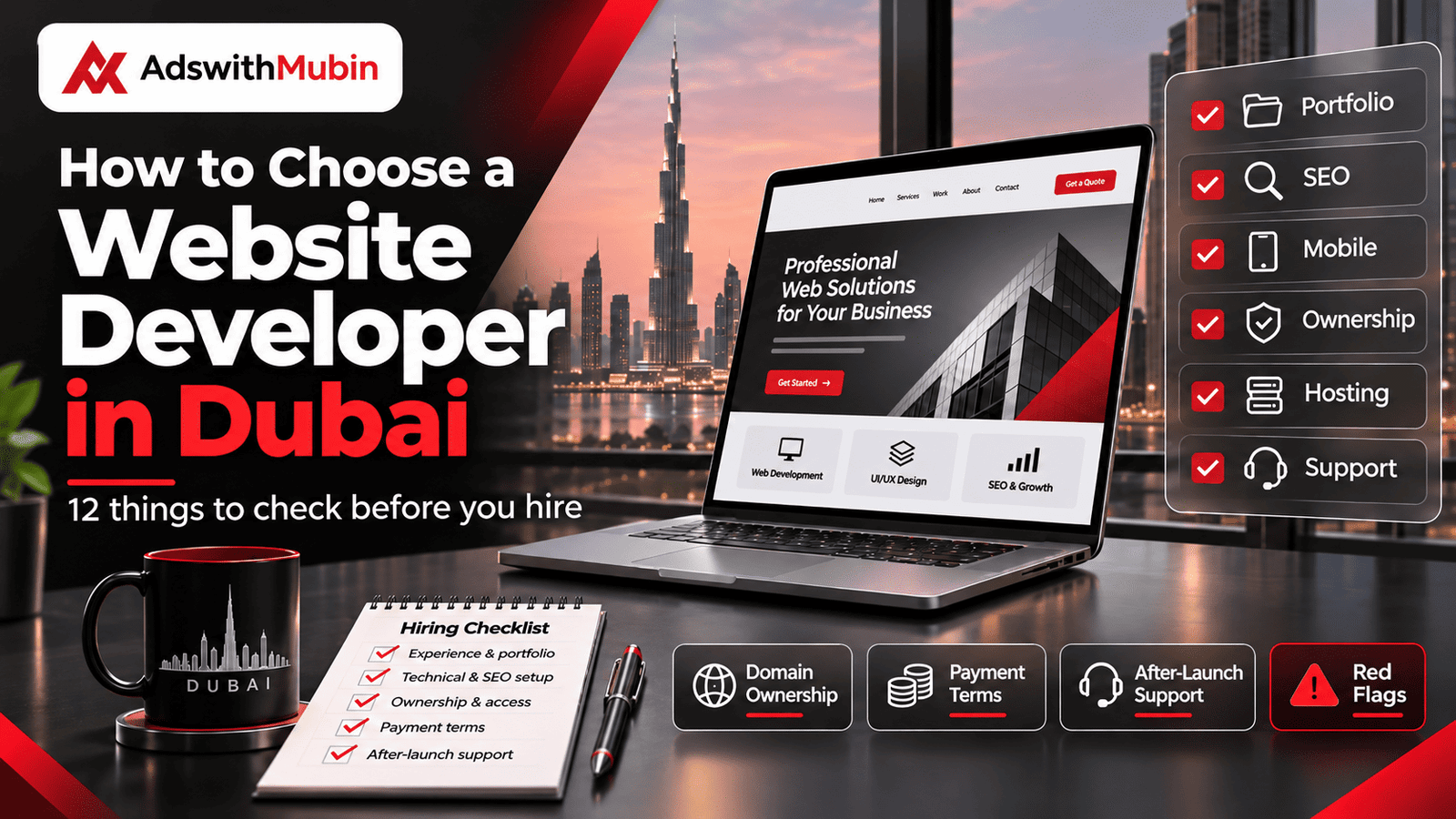
    How to Choose a Website Developer in Dubai: 12 Checks Before You Pay a Dirham

    By Mubin Shaikh | Ads With Mubin


    Every week, someone sends me a website that went wrong.


    The developer disappeared halfway through. The domain is registered in the developer’s name, and they won’t hand it over. The site looks fine on a laptop but breaks on a phone. Or it launched months ago and hasn’t brought in a single enquiry, because nobody thought about SEO, speed or how customers would actually contact the business.


    None of these problems show up in the quote. They show up later, when fixing them costs more than building it right the first time.


    I build websites for Dubai businesses as a website development freelancer, and I also run the Google Ads, SEO and lead generation that depend on those websites. So I see both sides: how sites are built, and whether they actually bring in customers.


    This guide covers how to choose a website developer in Dubai, with 12 practical checks, the questions to ask, and the red flags that should make you walk away.


    Why Choosing the Right Developer Matters So Much


    A website isn’t a one-time design job. It’s where your Google Ads land, where your SEO lives, where customers decide whether to trust you, and where they click to call or WhatsApp.


    A poorly built site costs you in ways that don’t appear on the invoice:


    • Ads that send traffic to pages nobody converts on
    • A site Google struggles to read, so you never rank
    • Slow pages that lose mobile visitors before they load
    • Being locked into one developer for every small change
    • A full rebuild a year or two later


    Picking the right developer upfront saves you all of that.


    1. Look at Live Websites, Not Just Screenshots


    Screenshots and mockups can look perfect. Live websites tell the truth.


    Ask for three to five live sites they built recently, then check each one yourself:


    • Open it on your phone. Is it easy to read and navigate? Do the buttons work?
    • Test the speed. Run it through Google Page Speed Insights. Slow scores on mobile are a warning sign.
    • Try the contact options. Tap the phone number and WhatsApp button. Submit the form.
    • Check the details. Broken links, placeholder text, blurry images or missing pages suggest rushed work.


    If a developer can’t show you live sites they built, be careful.


    1. Find Out Who Will Actually Build Your Website


    This is one of the most important questions, and few people ask it.


    With many companies, the person who sells you the website isn’t the one who builds it. The work may be passed to a junior, an offshore team or another subcontractor you never speak to.


    That isn’t automatically bad. But you should know who’s building it, how you’ll communicate with them, and who’s responsible if something goes wrong.


    1. Make Sure You’ll Own Your Domain, Hosting and Website


    This is the trap I see most often in Dubai.


    Some developers register your domain and hosting in their own name or account. Everything works fine until you want to change developer, move hosting or stop paying a monthly fee. Then you discover you don’t actually control your own website.


    Before you sign, confirm in writing that:


    • The domain is registered in your business name, in an account you can access
    • Hosting is in your account, or you get full access to it
    • You get administrator access to the website
    • You own the content, design and files once the project is paid for
    • Theme and plugin licences are transferred to you, or clearly explained


    If a developer resists any of this, walk away.


    1. Ask What Platform They’ll Use and Why


    WordPress, Shopify, Webflow, custom code. Each has its place.


    For most small and medium businesses in Dubai, WordPress is a practical choice: flexible, easy to update, good for SEO and widely supported. Shopify suits many ecommerce brands. Fully custom builds make sense for businesses with very specific functionality.


    A good developer explains why a platform fits your business. A weak one uses whatever they always use, regardless of what you need.


    Also ask: will you be able to update text, images and blog posts yourself? You shouldn’t need to message your developer to change a phone number.


    1. Check They Build With SEO in Mind


    A website that looks great but can’t rank is an expensive brochure.


    Ask how they handle:


    • Clean URLs and proper page structure
    • A separate page for each main service
    • Heading structure, titles and meta descriptions
    • Image compression and page speed
    • Mobile performance
    • XML sitemaps and indexing
    • Redirects if you’re replacing an old site (so you don’t lose existing rankings)
    • Basic schema markup


    If the answer is “we’ll install an SEO plugin”, that’s not enough. SEO foundations need to be planned into the structure from the start.


    1. Make Sure It’s Built for Mobile First


    Most of your Dubai visitors will see your website on a phone. Many of them will be deciding in seconds whether to call you or go back to Google.


    Mobile-first means:


    • Readable text without zooming
    • Buttons big enough to tap
    • Call and WhatsApp buttons easy to reach
    • Short, simple forms
    • Fast loading on mobile data


    Ask to see examples of their sites on a phone, not on a big monitor.


    1. Ask How the Site Will Generate Enquiries


    Your website exists to bring in customers. Ask the developer how they plan to make that happen:


    • Where will call, WhatsApp and form buttons appear?
    • Will each service have a clear call to action?
    • Will enquiries be tracked in Google Analytics and Tag Manager?
    • Can the site support landing pages for Google Ads or Meta Ads?


    Developers who only talk about design and colours, and never about leads, often build sites that look nice and convert poorly.


    1. Get a Clear, Written Scope


    A vague quote like “5-page website, AED 4,000” leaves too much open to interpretation. Later, you find out content writing wasn’t included, the blog costs extra, or forms are an add-on.


    A proper scope should list:


    • Number of pages and what each one is
    • Platform and theme approach
    • Features: forms, WhatsApp, booking, ecommerce, multilingual
    • Who provides content and images
    • SEO setup included
    • Number of revision rounds
    • Testing and launch
    • Training or handover
    • What’s not included


    If you’re comparing prices, my guide on website development cost in Dubai explains what typically affects the final figure.


    1. Check Payment Terms and Timeline


    Avoid paying 100% upfront. A fair structure usually splits payment into stages, such as a deposit to start, a payment after design approval, and the balance at launch.


    Ask for a realistic timeline with milestones: planning, design, development, your review, testing and launch. Also ask what happens if deadlines slip on either side, since delays often come from waiting for client content.


    1. Ask About Support After Launch


    Websites need updates. Plugins need security patches, forms break, content changes.


    Ask:


    • What support is included after launch, and for how long?
    • Is ongoing maintenance optional or compulsory?
    • What does a monthly care plan include and cost?
    • How quickly do they respond if the site goes down?


    Optional is better than compulsory. You should be able to manage your own site, or move it, if you choose.


    1. Check They’re a Legitimate, Licensed Business


    In the UAE, you should work with a provider who can issue a proper invoice and sign a contract. That protects you if things go wrong.


    Ask for their trade licence details. A legitimate developer will share them without hesitation. You can see mine on my licence page.


    1. Talk to Past Clients


    Reviews help, but a short conversation with a past client tells you much more.


    Ask the developer for one or two clients you can contact. Ask them: was the project on time, was communication clear, and did the website deliver what was promised?


    Questions to Ask Before You Hire


    Copy these into your first call:

    Question What a good answer sounds like
    Who will build my website? A named person you’ll speak to directly
    Will the domain and hosting be in my name? Yes, in your account, with full access
    Can I update the site myself? Yes, with a short handover or training
    How do you handle SEO during the build? Specific steps on structure, speed, URLs and redirects
    How will the site generate enquiries? Clear plan for calls, WhatsApp, forms and tracking
    What’s included and what’s extra? A written scope listing both
    What are the payment terms? Staged payments tied to milestones
    What happens after launch? Defined support, with maintenance optional
    Can I see live sites and speak to clients? Yes, without hesitation


    Red Flags to Watch For


    • Very low prices with no clear scope
    • 100% payment upfront
    • Domain or hosting registered in the developer’s name
    • No live websites to show
    • No written contract or invoice
    • “We’ll handle SEO later”
    • Pressure to sign quickly
    • No clear answer on who builds the site
    • Compulsory monthly fees just to keep your own website online


    Freelancer or Web Development Company?


    Both can work. A freelancer usually offers direct communication, faster decisions and lower overheads. A company may suit large projects needing several specialists at once.


    What matters more than the label is the checklist above: ownership, scope, SEO, mobile performance, support and accountability. I’ve written more about the difference in my guide to website design and development services in Dubai.


    Frequently Asked Questions


    How do I choose a good website developer in Dubai?

    Check live sites they’ve built, confirm who will build yours, make sure you’ll own the domain and hosting, ask how they handle SEO and mobile performance, and get a clear written scope with staged payments.


    Should I hire a freelancer or an agency for my website?

    For most small and medium businesses with a clear scope, a licensed freelancer is often faster and more cost-effective. Larger, complex projects may need an agency team.


    What should a website development contract include?

    Scope, pages, features, platform, content responsibilities, revisions, timeline, payment terms, ownership of the domain, hosting and files, and post-launch support.


    Who should own my website domain?

    You. The domain should be registered in your business name, in an account you control, even if your developer manages it for you.


    How long does it take to build a website in Dubai?

    A simple business website usually takes a few weeks. Larger or ecommerce sites take longer, and timelines often depend on how quickly content is ready.


    Can a website developer also help with SEO and ads?

    Some can. It helps when the person building your site also understands how SEO and paid ads work, because the website is built to support them from day one.


    Need a Website That Brings in Customers?

    I build fast, mobile-first WordPress and WooCommerce websites for Dubai businesses, with SEO foundations, WhatsApp and call tracking set up properly from the start. Every project gets a fixed quote upfront, you own your domain, hosting and site, and ongoing care is optional.


    Send me a message with what your business does and what you need the website to achieve. I’ll tell you what I’d build and what it would cost, no obligation.


    Explore my website development services in Dubai


    Call / WhatsApp: +971 52 770 7860
    Email: info@adswithmubin.com
    Website: https://adswithmubin.com/
     

  • How to Rank on Google Maps in Dubai: A Practical Guide for Cleaning and Maintenance Companies

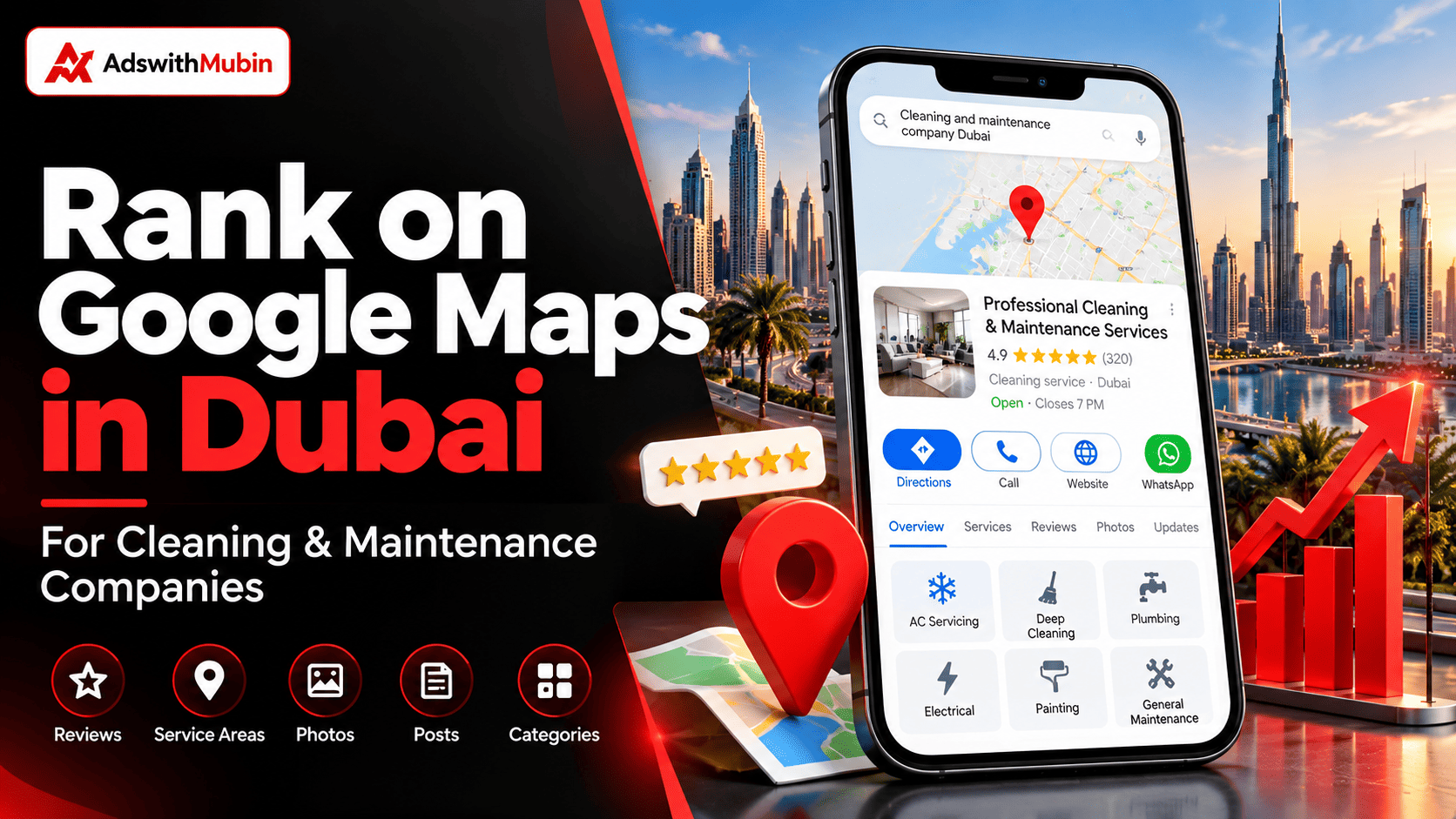
    How to Rank on Google Maps in Dubai: A Practical Guide for Cleaning and Maintenance Companies

    By Mubin Shaikh | Ads With Mubin


    When someone in Dubai searches “AC repair near me” or “deep cleaning JVC”, the first thing they see usually isn’t a website. It’s a map with three businesses on it.


    Those three get most of the calls. Everyone else is scrolling territory.


    For cleaning and maintenance companies, that map is often worth more than your website and your ads put together, because the people searching need someone today and they call whoever looks trustworthy and close.


    I manage Google Business Profiles for home service companies in Dubai, including a technical services company that handles AC, plumbing, electrical and maintenance contracts. This guide explains how to rank on Google Maps in Dubai, what actually moves your position, and the mistakes that quietly hold most profiles back.


    How Google Decides Who Shows Up on the Map


    Google says local results are based on three things:


    Relevance. How well your profile matches what the person searched. If someone searches “water tank cleaning” and your profile never mentions it, you won’t show up, no matter how good your reviews are.


    Distance. How close you are to the person searching, or to the area in their search. This is why a company in Al Quoz rarely ranks for “plumber Dubai Marina” without extra work.


    Prominence. How well known and trusted your business looks. Reviews, ratings, photos, mentions across the web and your website all feed into this.


    You can’t move your office closer to every customer. But you can control relevance and prominence, and that’s where most Dubai companies leave the door wide open.


    Step 1: Get the Basics Exactly Right


    This sounds obvious, but I regularly find profiles with errors here.


    • Business name. Use your real trading name, exactly as it appears on your trade licence and signage. Don’t add keywords like “Best AC Repair Dubai 24/7”. It might work for a few weeks, but it breaks Google’s guidelines and is one of the quickest ways to get a profile suspended.


    • Phone number. Use a number that’s actually answered. A missed call from Maps is a lost job.


    • WhatsApp and website. Add both. Link the website to a page relevant to your main service, not a broken or half-built homepage.


    • Hours. Accurate hours matter. If you offer 24-hour emergency service, say so, and make sure someone picks up.


    • Address or service area. If customers don’t visit your office, set yourself up as a service-area business and hide the address. If you have a real walk-in location, show it.


    Keep these details identical everywhere: your website, social profiles and directory listings. Inconsistent names or numbers confuse Google.


    Step 2: Choose Categories Carefully


    Your primary category is one of the strongest signals you control. Pick the one that matches the service bringing in most of your revenue.


    For example:

    • An AC company should usually lead with an air conditioning repair category
    • A cleaning company with a house cleaning category
    • A general maintenance company with a handyman or maintenance-related category, depending on what customers search most


    Then add secondary categories for your other real services: plumbing, electrical, duct cleaning, pest control, carpet cleaning and so on.


    Don’t add categories for services you don’t actually offer. It won’t help, and it brings in calls you can’t take.


    Step 3: List Every Service Separately


    Most profiles I audit list three or four vague services. That’s a missed opportunity.


    Every service someone might search for should be listed, with a short description:


    • AC servicing
    • AC repair
    • AC duct cleaning
    • AC coil cleaning
    • Water tank cleaning
    • Deep cleaning
    • Move-in / move-out cleaning
    • Sofa and carpet cleaning
    • Plumbing repairs
    • Electrical repairs
    • Painting
    • Annual maintenance contracts


    Add starting prices where you can. Dubai customers compare prices quickly, and “From AED X” helps people choose you over a profile that says nothing.


    Step 4: Set Service Areas That Match Reality


    List the communities you actually cover. JVC, Al Barsha, Dubai Marina, JLT, Mirdif, Business Bay, Arabian Ranches, wherever you send technicians.


    Be honest about it. If you list the whole of Dubai and the UAE but only really work in a few areas, you’ll get calls you can’t serve and reviews complaining about late arrivals.


    Service areas help Google understand where you operate, but they don’t guarantee ranking in every area. That’s where your website comes in (Step 9).


    Step 5: Build a Steady Flow of Reviews


    Reviews are the part of your profile customers read most, and one of the biggest prominence signals for Google.


    What works:


    • Ask every happy customer, right after the job. The technician is the best person to ask, while the customer is still pleased.
    • Make it easy. Send your direct review link on WhatsApp straight after the job is done.
    • Aim for consistency, not bursts. A few new reviews every week looks far more natural than 50 in one month and then nothing.
    • Encourage detail. A review that mentions “AC service in Al Barsha, technician arrived on time” helps more than “good service”.
    • Reply to every review. Thank people by name, and mention the service when it fits. For bad reviews, respond calmly, apologise where it’s fair and offer to fix it offline. Future customers read your replies.


    Never buy reviews, use review swaps or post fake ones. Google detects and removes them, and can restrict or suspend profiles that do it.


    Step 6: Upload Real Photos Regularly


    Photos build trust and keep your profile active.


    Upload:


    • Your team in uniform
    • Branded vans and equipment
    • Before-and-after shots of real jobs (a dirty AC coil, a cleaned duct, a deep-cleaned kitchen)
    • Your office or warehouse, if you have one
    • Short videos of work in progress


    Avoid stock photos. In home services, customers want to see who’s coming into their house.


    Add new photos every week or two. A profile that was last updated a year ago looks abandoned.


    Step 7: Post Updates Every Week


    Google Business Profile posts are free and most of your competitors don’t use them.


    Ideas that work for cleaning and maintenance companies:


    • Seasonal reminders: “Book your pre-summer AC service”
    • Offers: “Ramadan deep cleaning package”
    • Recently completed jobs with photos
    • Quick tips: “How often should you service your AC in Dubai?”
    • Annual maintenance contract promotions


    Keep posts short, add a photo and a clear button (call, WhatsApp or book).


    Step 8: Answer Questions and Messages Fast


    Use the Q&A section to answer common questions yourself: prices, areas covered, response times, whether you work on weekends. Customers see those answers before they call.


    If messaging is turned on, reply quickly. Slow responses lose jobs to the next profile on the map.


    Step 9: Make Your Website Support Your Profile


    Your Google profile and your website work together. Google looks at your site to understand what you do and where.


    Your website should have:


    • A separate page for each main service
    • Pages for your busiest service areas, written properly, not copy-pasted with the community name swapped
    • Your business name, phone and service areas matching your profile exactly
    • Reviews and real photos
    • A fast, mobile-friendly design with WhatsApp and call buttons


    If your website is weak, it holds your map ranking back. My guide on website development cost in Dubai covers what a proper build involves.


    Step 10: Get Mentioned in the Right Places


    Mentions of your business on other trusted sites help prominence:


    • Business directories relevant to the UAE and your industry
    • Local community and property websites
    • Supplier or brand partner pages (for example, if you’re an authorised service provider for an AC brand)
    • Local news or features


    Make sure your name, phone and details are consistent across all of them.


    Mistakes That Hold Dubai Profiles Back


    • Keyword-stuffed business names (risk of suspension)
    • Wrong primary category
    • Services listed vaguely or not at all
    • No photos, or only stock images
    • Reviews that stopped coming months ago
    • Ignoring negative reviews
    • Phone numbers that go unanswered
    • Fake addresses or virtual offices used to appear in more areas (another common reason for suspension)
    • A website that doesn’t match the profile


    How Long Does It Take to Rank on Google Maps?


    It depends on your starting point and your competition. Fixing categories, services and basic details can make a difference within a few weeks. Building enough reviews and authority to hold a top-three position in competitive areas usually takes a few months of steady work.


    The companies that stay at the top are the ones that treat their profile as an ongoing job, not a one-time setup.


    Google Maps Plus Ads: The Strongest Combination


    Ranking on the map brings free, high-intent calls. But it takes time, and you won’t rank in every area.


    That’s why many maintenance companies run Google Ads alongside their profile. Ads cover the areas and services where you don’t rank yet, while your profile builds. You can read more in my guides on Google Ads cost in Dubai and lead generation for cleaning and maintenance companies.


    Frequently Asked Questions


    How do I rank my cleaning company on Google Maps in Dubai?

    Choose the right primary category, list every service, set accurate service areas, collect reviews every week, upload real photos and post regularly. Back it up with a website that has proper service pages.


    Can I rank on Google Maps without an office address?

    Yes. Many cleaning and maintenance companies run as service-area businesses with the address hidden. You’ll still need to verify the business with Google.


    Does adding keywords to my business name help?

    It can give a short boost, but it breaks Google’s guidelines and puts your profile at risk of suspension. Use your real business name.


    How many reviews do I need to rank?

    There’s no fixed number. What matters is having more recent, genuine, detailed reviews than the competitors around you, and getting them consistently.


    Why does my competitor rank above me with fewer reviews?

    They may be closer to the searcher, have a better-matched category, a stronger website or more relevant service listings. Reviews are important, but they’re one factor among several.


    How often should I update my Google Business Profile?

    Add photos and posts at least weekly, reply to every review, and update services, hours and prices whenever they change.


    Want Your Company in the Top 3 on Google Maps?

    I manage Google Business Profiles for cleaning and maintenance companies in Dubai, along with the website, ads and SEO that support them.


    Send me your company name and the services you want to rank for. I’ll check your profile and tell you the three things holding it back, whether you hire me or not.


    Explore my Google Business Profile optimisation service


    Call / WhatsApp: +971 52 770 7860
    Email: info@adswithmubin.com
    Website: https://adswithmubin.com/